

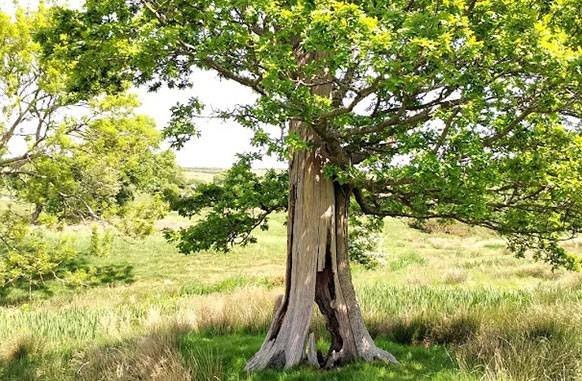
A homeowner near Wootton Bridge called us in about a boundary line of ash trees that had gone thin at the top over the summer, convinced they needed to come down before autumn gales. It’s a conversation we’re having a lot at the moment. Ash dieback, caused by the fungal disease Hymenoscyphus fraxineus, has been working through the Island’s ash population for years, and an updated summer guidance note from arboricultural bodies including the Tree Council and Forestry Commission has just reset how it should be managed.
The disease attacks common ash, Fraxinus excelsior, causing canopy thinning, dead wood in the crown and lesions down the stem that weaken the structure over time. Some trees decline within a couple of seasons; others hang on for years with useful tolerance to the fungus. That’s exactly why felling every affected ash isn’t the answer any more.
Because a felling licence is still required unless a tree is dead or an immediate danger, and a Tree Preservation Order doesn’t lift just because disease is present. Councils across the Island are still minded to protect ash where it can be safely managed, so permission needs checking before any chainsaw goes near the base.
What we do instead, more often than not, is crown reduction and deadwooding to take the weight and risk out of a tree while leaving the root system and habitat value intact — then monitor it. Dead branches on a diseased ash can fail without much warning in windy weather, so if you’ve got mature ash near a driveway, patio or the house itself, it’s worth having it looked at rather than guessing.
We’ve been working as qualified arboriculturists on the Isle of Wight for over 15 years, covering everything from garden services to full tree surveys, and we’d rather give you an honest management plan than a quote to fell a tree that doesn’t need it. Find us at arbadvice.co.uk/.
